
Is the logo dead?
A contentious and ongoing question within the
creative community. In our opinion a logo should
be utilised as a unique visual asset to identify,
and differentiate your company. Underestimating
its purpose and value weakens your brand.
The logo’s purpose
Your logo should be an introduction to, and appropriate representation of your offer, and where you position yourself. It sits within a wider brand world (alongside your brand fonts, colours, photography etc.) so may not be the key player, but it shouldn’t be an afterthought.
Most of us don’t ‘think’ about logos. But we react to them emotionally as being representative of a company’s unique stance and values. Every typeface, colour and icon is relevant and provokes an immediate sensory response, which can influence your audience’s decision making. As a result, logos can be powerful tools to build recognition, engagement and brand loyalty.
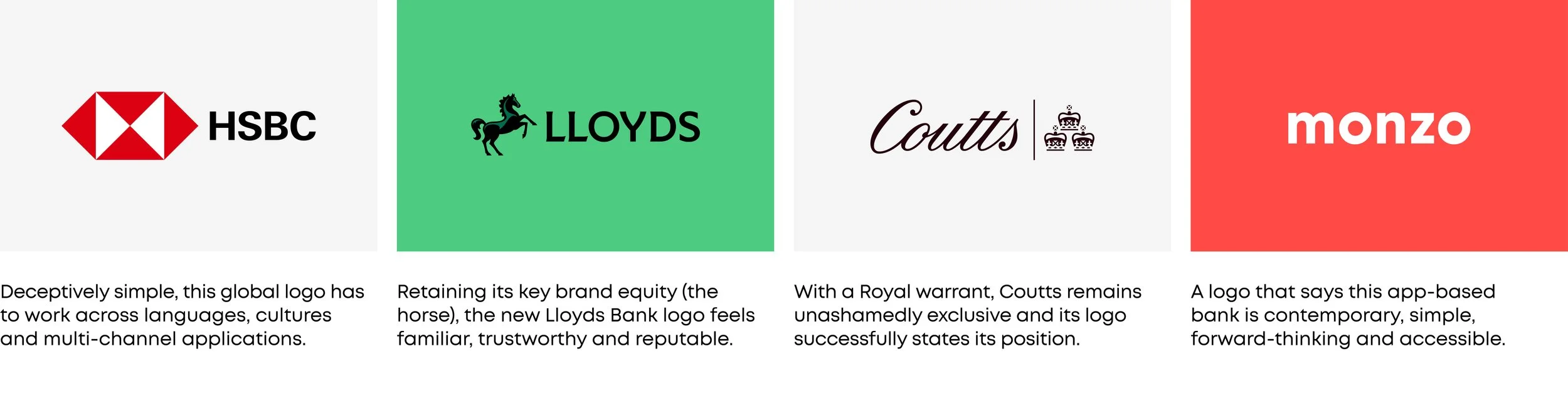
Here are four examples of how logos in the financial sector have used strategy/positioning, then design craft, to represent their respective brand propositions.
Key takeaway
Your company logo should represent what you stand for. Establish your position first, then create a unique identifying logo that sets the tone your audience will understand and resonate with.
The logo’s value
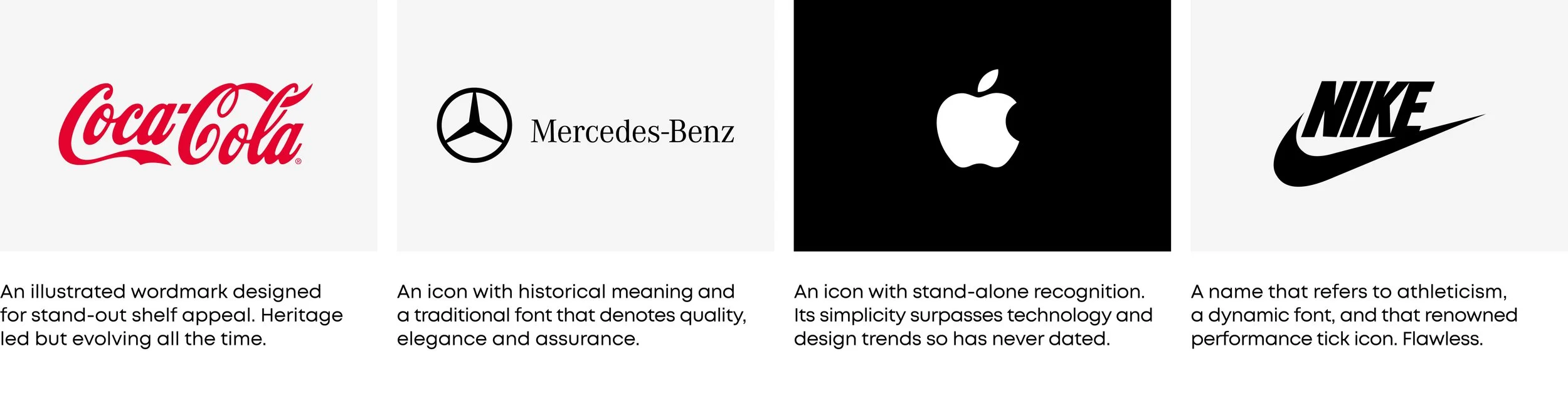
A company’s logo can be its most valuable asset in relation to recognition and its inherent correlation to built reputation and consumer trust. Think of brands such as Coca Cola, Mercedes Benz, Apple or Nike and imagine a scenario where their logo isn’t valued or protected. Juggernauts now but each one has retained the essence of their core logo from the offset. Logos don’t have to be complicated. But they will stand the test of time if they are considered, timeless, crafted and unique.
Big brand logos aren’t complicated, but they are considered.
Key takeaway
A bespoke logo or wordmark that demonstrates considered design, and is uniquely yours, will help you stand out. It could be really simple but it should be able to stand the test of time, and be robust enough to evolve in line with your company’s interests and growth.
Retaining brand equity
Rebranding can create momentum, but it isn’t about change for its own sake. Established organisations may have spent years building trust and recognition around a name, a logo and a brand world that focuses on their particular proposition. The key is understanding what’s worth keeping, and identifying what needs to change, and why.
Key takeaway
Consider the value of retaining your current name, logo and brand elements (such as fonts or colours). Do they need updating/refreshed to represent your offer better? Or is a more significant change an appropriate strategy to position yourself as future-proof? A successful brand exercise should understand what is worth keeping as carefully as it identifies what needs to change.